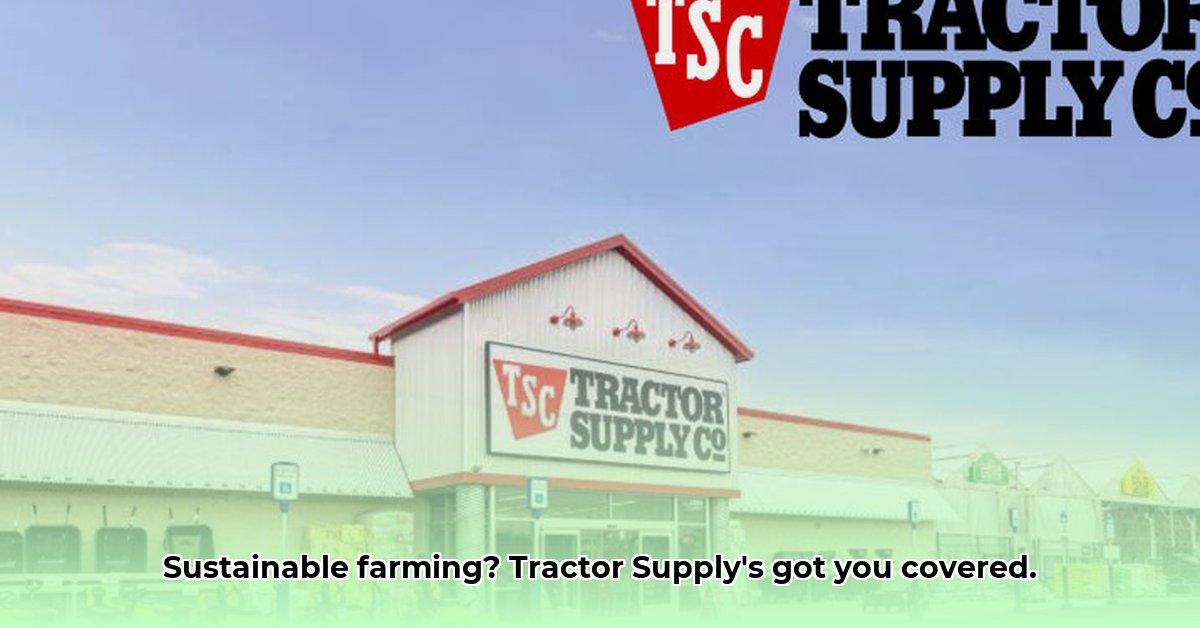
Tractor Supply Company (TSC) in Blue Ridge, Georgia, plays a surprisingly significant, albeit indirect, role in supporting local sustainable agriculture. While not explicitly a "sustainable farming" store, its product offerings and community presence subtly influence the farming practices of the region's diverse agricultural landscape. This article explores TSC's contribution, identifies limitations in quantifying its impact, and proposes actionable steps to further enhance its role in fostering a sustainable future for Blue Ridge. For more on essential farming tools, check out this resource on tillers and cultivators.
TSC's Product Offerings: Seeds of Change
TSC in Blue Ridge stocks a wide array of products, many of which directly support sustainable farming. Organic seeds, crucial for healthy soil and reduced chemical use, are readily available. Water-efficient irrigation systems, vital in the sometimes-dry Blue Ridge climate, are also on offer. Durable fencing materials help protect livestock and the land, promoting responsible land management. Even everyday items like compost bins and tools designed for efficient work contribute to sustainable farming practices. But the impact extends beyond the product itself. A knowledgeable TSC employee might advise a new gardener on the best soil amendments for optimal growth, a small interaction with a large impact. This informal guidance, a crucial element of TSC’s contribution, is harder to quantify yet equally important.
The Local Context: A Community Rooted in the Land
Blue Ridge boasts a rich agricultural heritage, characterized by numerous small-scale farms and home gardens. This makes TSC's role even more significant. The store serves as a central hub, providing essential supplies to those working the land. It’s more than just a retail location; it's a communal space where farmers and gardeners might exchange advice and share experiences, strengthening the local agricultural network. This informal exchange of information is a powerful driver of sustainable practices, often overlooked but crucial. How many sustainable practices are passed down within these conversations? This crucial factor needs further research.
Addressing the Limitations: The Need for Data
While the potential for TSC’s positive contribution is undeniable, a significant limitation exists: a lack of quantifiable data. We need extensive research to accurately assess the precise impact of TSC's product offerings on the sustainability of Blue Ridge's agricultural practices. How many farmers actively utilize the organic seeds? What’s the overall water savings attributable to the irrigation systems sold? This absence of concrete data necessitates further research to fully understand and articulate TSC's true influence. Without this data, the total value of the indirect impact remains unknown.
Opportunities for Improvement: A Three-Pronged Approach
Significant opportunities exist to amplify TSC’s contribution to sustainable agriculture in Blue Ridge. A collaborative effort, involving TSC Blue Ridge, local farmers, and TSC corporate, is essential.
For Tractor Supply Blue Ridge:
- Targeted Product Promotion: Create a clearly designated section for sustainable products, with informative signage highlighting their benefits and environmental impact.
- Staff Education Initiatives: Invest in employee training on sustainable agricultural practices to empower staff to guide customers effectively toward eco-friendly options.
- Community Engagement: Partner with local organizations and farmer’s markets to promote sustainable agricultural initiatives and build stronger community ties.
For Local Farmers and Gardeners:
- Active Engagement: Actively seek out and utilize the sustainable products and advice available at TSC.
- Knowledge Sharing: Participate in community events and workshops to share successful sustainable farming practices.
- Demand for Sustainable Products: Clearly communicate to TSC the need for more sustainable options, influencing their purchasing decisions.
For Tractor Supply Corporate:
- Investment in Research: Conduct thorough market research to determine the specific needs and preferences of sustainable agriculture consumers in Blue Ridge.
- Supply Chain Sustainability: Prioritize sourcing sustainable products throughout the supply chain to guarantee the long-term sustainability of their offerings.
- Data Transparency: Commit to tracking and publicly reporting data on the environmental impact of its products and operations to enhance accountability.
Conclusion: A Shared Harvest
Tractor Supply Blue Ridge plays a vital, if largely indirect, role in contributing to sustainable agriculture within the community. This contribution is significant, but requires further research for a full understanding. Through collaborative action, involving the store, local farmers, and TSC corporate, this role can be significantly enhanced. By embracing the recommendations outlined above, a brighter, more sustainable future for Blue Ridge's agricultural landscape is attainable—a shared harvest built on collaboration and environmental responsibility.